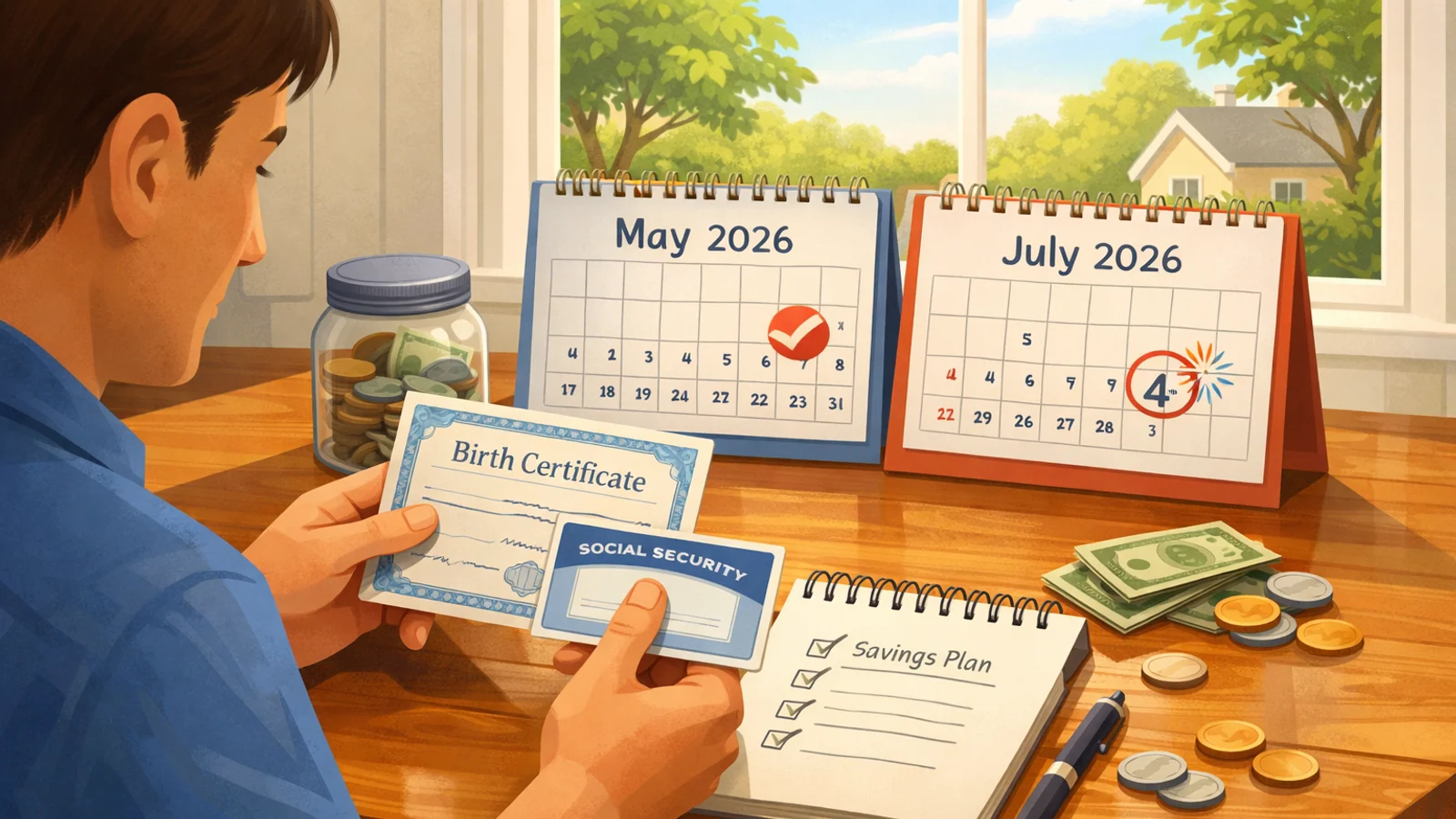
Parents are hearing about new child investment accounts in 2026, and the questions are practical: Who qualifies? When can you open one? When does any government seed money actually arrive? And what should you do now so you are not scrambling later?
Here is the short version based on current IRS guidance as of March 18, 2026: the account framework already exists in law, proposed Treasury and IRS rules were released on March 6, 2026, account activation steps are expected around May 2026, and no contributions can be made before July 4, 2026. The one-time federal pilot contribution is $1,000 for eligible children, but it is not deposited before July 4, 2026. (irs.gov)
What parents are asking right now
1) Is this program real, or still just a proposal?
The accounts were created by federal law signed on July 4, 2025. What is still being worked out is the operational guidance for the contribution pilot program, including how elections are made and how Treasury sends the $1,000 pilot contribution for eligible children. Treasury and the IRS issued proposed regulations on March 6, 2026, which is why many parents are only starting to hear about the rollout now. (irs.gov)
2) When can parents actually do something?
The most useful planning assumption today is this:
- Around May 2026: parents should expect activation or election steps to start becoming available.
- July 4, 2026 or later: contributions can begin.
- After the election is processed and the account is confirmed open: Treasury can make the one-time $1,000 pilot contribution for eligible children, but not before July 4, 2026. (irs.gov)
That timing matters because many parents assume the account can be funded as soon as it is opened. Current IRS instructions say otherwise: contributions cannot be made before July 4, 2026. (irs.gov)
3) Which children appear eligible for the $1,000 pilot contribution?
Current IRS instructions say an authorized individual can make the pilot contribution election for a child who meets several conditions, including:
- the child is expected to be the authorized individual’s qualifying child for the year of the election,
- the child was born after December 31, 2024, and before January 1, 2029,
- the child has not already had a pilot contribution election processed,
- the child is a U.S. citizen, and
- the child has a Social Security number. (irs.gov)
Because this is a new program, families should expect operational details to keep evolving. KidTrustFund is not a government agency, and parents should use official IRS and Treasury instructions for final eligibility checks. (irs.gov)
What parents can do before May 2026
If you want to be ready, focus on paperwork and account setup questions now instead of waiting for the launch window.
Your practical checklist
- Confirm the child’s Social Security number is issued and matches records.
- Keep the birth date handy and confirm the child falls inside the currently listed eligibility window.
- Watch for Form 4547 instructions and online election options. IRS instructions say the election must be made on Form 4547, with online options expected beginning in the middle of 2026. (irs.gov)
- Do not plan on funding the account before July 4, 2026. Even if the account is opened earlier, current guidance says contributions must wait. (irs.gov)
- Set a reminder for May 2026 and another for July 4, 2026. One date is about activation steps; the other is about actual funding.
The biggest misunderstanding to avoid
The most common confusion is mixing up opening, activating, electing, and funding.
Those are not the same step.
A simple way to think about it:
- Opening or electing may start around May 2026.
- Funding starts July 4, 2026 or later.
- The federal $1,000 pilot contribution comes only after the election is made and Treasury confirms the account is open, and even then it is not deposited before July 4, 2026. (irs.gov)
How KidTrustFund suggests parents plan
For most families, the smart move is not to guess at every future rule. It is to prepare for the parts that are already clear.
A sensible 2026 timeline
March to April 2026
- Gather the child’s identifying information.
- Read the latest IRS instructions.
- Decide which parent or authorized individual will handle the election.
May 2026
- Watch for activation notices or election access.
- Review Form 4547 and any official online filing option once available.
July 4, 2026 and after
- Make any allowed contributions only after the start date.
- Track whether the one-time federal pilot contribution posts for eligible children.
This approach keeps expectations realistic and reduces the risk of missing a step because of rollout timing.
Bottom line for parents on March 18, 2026
If you have a child who may qualify, this is the moment to get organized, not to rush money into an account early. The current public guidance points to activation around May 2026 and contributions starting July 4, 2026. The federal pilot contribution is $1,000 for eligible children, but families should expect the actual deposit to happen only after the election is made and processing is complete. (irs.gov)
KidTrustFund can help parents track the timeline and questions, but it is not an official government source and cannot promise eligibility, tax treatment, or account outcomes. For final instructions, parents should rely on current IRS and Treasury guidance. (irs.gov)