Parents are hearing a lot of versions of the same question right now: What should I actually do before the 2026 child account rollout starts?
For families tracking this program, the short answer is: get organized now, watch for activation steps around May 2026, and understand that private contributions are expected to start on July 4, 2026. Public materials tied to the rollout say pilot program contributions for eligible children cannot be deposited earlier than July 4, 2026, and official processing is expected to ramp up in the spring filing season. (irs.gov)
KidTrustFund is a private service, not a government agency, so the most useful role we can play is helping families prepare for the practical questions that are coming up now. KidTrustFund itself states that it is not affiliated with any government agency and does not guarantee eligibility, benefit amounts, or timing. (kidtrustfund.com)
The big parent questions right now
1) Is anything happening yet, or do we still have to wait?
As of March 20, 2026, parents are in the preparation window. Public guidance and reporting point to authentication or activation notices around May 2026, while account funding and private contributions are tied to July 4, 2026. The IRS has also published language saying no contribution may be accepted before July 4, 2026. (irs.gov)
2) Who may be eligible for the federal seed money?
Public summaries say the pilot program is aimed at children born from 2025 through 2028, with a one-time federal contribution for eligible children, while families and others may later add private contributions subject to annual limits. Because operational details still matter, parents should treat eligibility as something to confirm carefully when activation opens. (jccscpa.com)
3) When can parents or grandparents put money in?
Current public materials consistently point to July 4, 2026 as the start date for private contributions. One CPA summary says parents and others such as grandparents can contribute beginning that day, and IRS bulletin language says contributions cannot be accepted earlier. (jccscpa.com)
4) How much can families contribute?
Several public summaries describe a combined annual private contribution limit of up to $5,000 per child during the growth period, though parents should still verify final operational rules and trustee procedures once accounts are live. (jccscpa.com)
What parents can do now
You do not need to guess your way through the next few months. A practical checklist is enough.
Step 1: Gather identity documents now
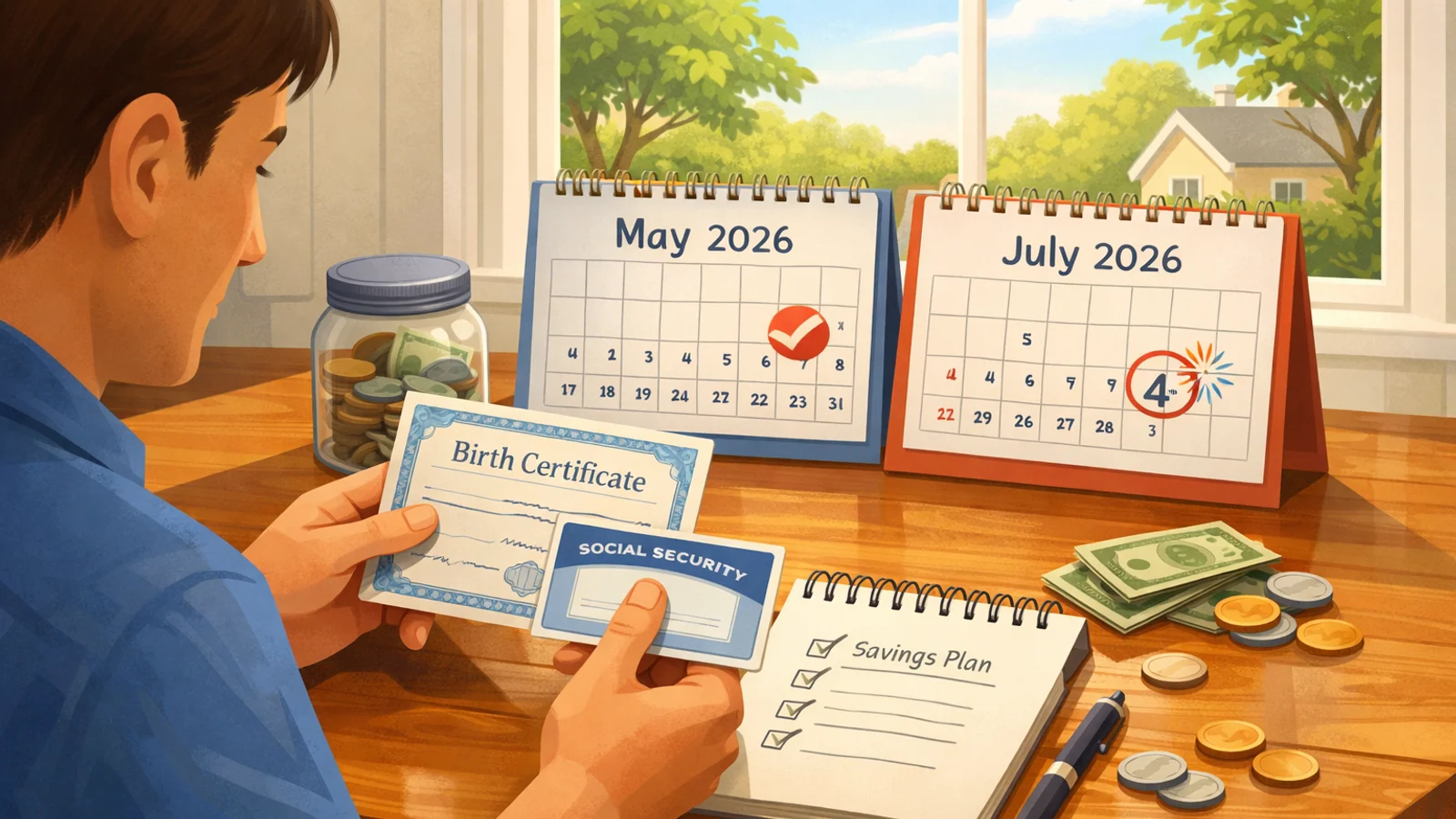
If activation opens around May 2026, delays are most likely to come from missing basic records. Put these in one folder now:
- Child’s Social Security number or card information
- Child’s birth certificate
- Parent or guardian ID
- Current mailing address
- Most recent tax filing records if relevant to the enrollment flow
Reporting on the rollout says parents may file to open accounts during tax season, with authentication starting in May 2026. (washingtonpost.com)
Step 2: Decide who will monitor deadlines
In many families, account tasks stall because everybody assumes somebody else is watching. Pick one person to handle:
- activation notices
- document collection
- account confirmation
- contribution reminders after July 4, 2026
Step 3: Make a contribution plan before contributions open
Do not wait until summer to decide whether you want to contribute. Even a simple plan helps:
- $25 per month
- birthday-only contributions
- grandparent holiday gifts into the account
- one annual lump sum if cash flow is uneven
The point is not to promise a return. The point is to make the account easier to use once contributions are allowed.
Step 4: Talk with relatives early
If grandparents or other family members want to help, tell them the likely timeline now:
- May 2026: watch for activation/authentication steps
- July 4, 2026: contributions are expected to begin
That avoids a common problem: relatives trying to send money before the account can legally accept it. IRS guidance says contributions cannot be accepted before July 4, 2026. (irs.gov)
New developments parents should watch
A few details have made this rollout more concrete in recent months.
The date window is getting clearer
The strongest public timing signals now line up around two dates:
- around May 2026 for activation or authentication
- July 4, 2026 for deposits and family contributions
That matters because it tells parents this is not just a vague future idea anymore; it is a staged rollout with a spring setup window and a summer funding start. This is an inference based on IRS bulletin language plus current public reporting. (irs.gov)
Employers may become part of the conversation
Recent reporting also notes that some large employers and financial firms have discussed matching or supporting contributions tied to these accounts. That does not mean every family will have employer support, but it does mean parents may want to watch workplace benefits announcements later in 2026. (washingtonpost.com)
Operational details may still evolve
Comment letters and professional summaries show that consumer protections, access, and take-up among lower-income or non-filing families are still active implementation topics. In plain English: the framework is public, but the real parent experience will depend on how the final systems work. (urban.org)
A smart parent plan for spring 2026
If you want the practical version, here it is:
- Do not assume the account is active yet. As of March 20, 2026, the main public dates still point ahead. (irs.gov)
- Prepare documents now so May activation is easier.
- Set a reminder for May 1, 2026 to watch for notices and instructions.
- Set another reminder for July 4, 2026 for first contribution eligibility.
- Start small if needed. A workable habit beats an ambitious plan you never use.
- Verify eligibility directly when enrollment opens. No private brand, including KidTrustFund, can guarantee approval, timing, or benefit amount. (kidtrustfund.com)
Bottom line
For parents, the current moment is less about investing immediately and more about being ready. The clearest public timeline today points to activation around May 2026 and contributions beginning July 4, 2026. If you get your documents together, assign one adult to track the process, and decide on a simple family contribution plan now, you will be in a much better position when the rollout moves from headlines to actual account setup. (irs.gov)