Parents are hearing a lot of questions right now about the new federal child investment account rollout. Here’s the practical version: what seems settled as of March 19, 2026, what still looks like rollout detail, and what families can do now if they want to stay organized.
What parents are asking right now
Most current questions fall into a few buckets:
- Is the program real and active yet? Yes, the program framework is public, but the rollout is still in stages.
- Who may qualify for the $1,000 federal seed contribution? Public guidance says the pilot contribution is for certain eligible children, with the main birth-date window tied to children born after December 31, 2024 and before January 1, 2029. (irs.gov)
- Can parents put money in yet? Not yet. Current public materials point to contributions beginning on July 4, 2026. (ap.org)
- When does the account setup process move forward? Current reporting and federal guidance indicate that parent notices or next-step activation details are expected around May 2026. (ap.org)
- Do older kids qualify for the same $1,000 deposit? In current coverage, older children may be able to have an account opened, but they are generally not described as receiving the same newborn-era federal seed amount. (ap.org)
What appears to be confirmed as of March 19, 2026
Based on the most current public information, the federal program was created by legislation enacted on July 4, 2025, and Treasury and the IRS issued proposed regulations on March 6, 2026 covering how the one-time $1,000 pilot contribution works for eligible children. (irs.gov)
Public-facing federal and major news sources also line up on two dates parents care about most:
- Activation or follow-up notices: around May 2026
- Contributions allowed to begin: July 4, 2026 (ap.org)
There is also public reporting that parents or guardians may need to make an election using IRS Form 4547 to get the process started for an eligible child. (ap.org)
What still looks like a rollout issue, not a finished system
Even with proposed regulations out, this still looks like a live implementation phase rather than a fully mature program.
Parents should expect possible updates on:
- account-opening mechanics
- identity verification steps
- what custodians or financial institutions will handle accounts
- how employer contributions will actually be administered
- how families will track whether a child’s election and activation are complete (irs.gov)
That means families should be careful about treating social posts or marketing pages as final instructions. The timeline looks public, but the exact process may still get refined.
A simple planning checklist for parents
If you want to be ready without overcomplicating it, focus on paperwork and timing.
1. Confirm your child’s basics
Have these details easy to access:
- full legal name
- date of birth
- Social Security number, if issued
- parent or guardian information used on tax filings
- current mailing address and email
This is a practical step only. It does not guarantee eligibility.
2. Watch the two key dates
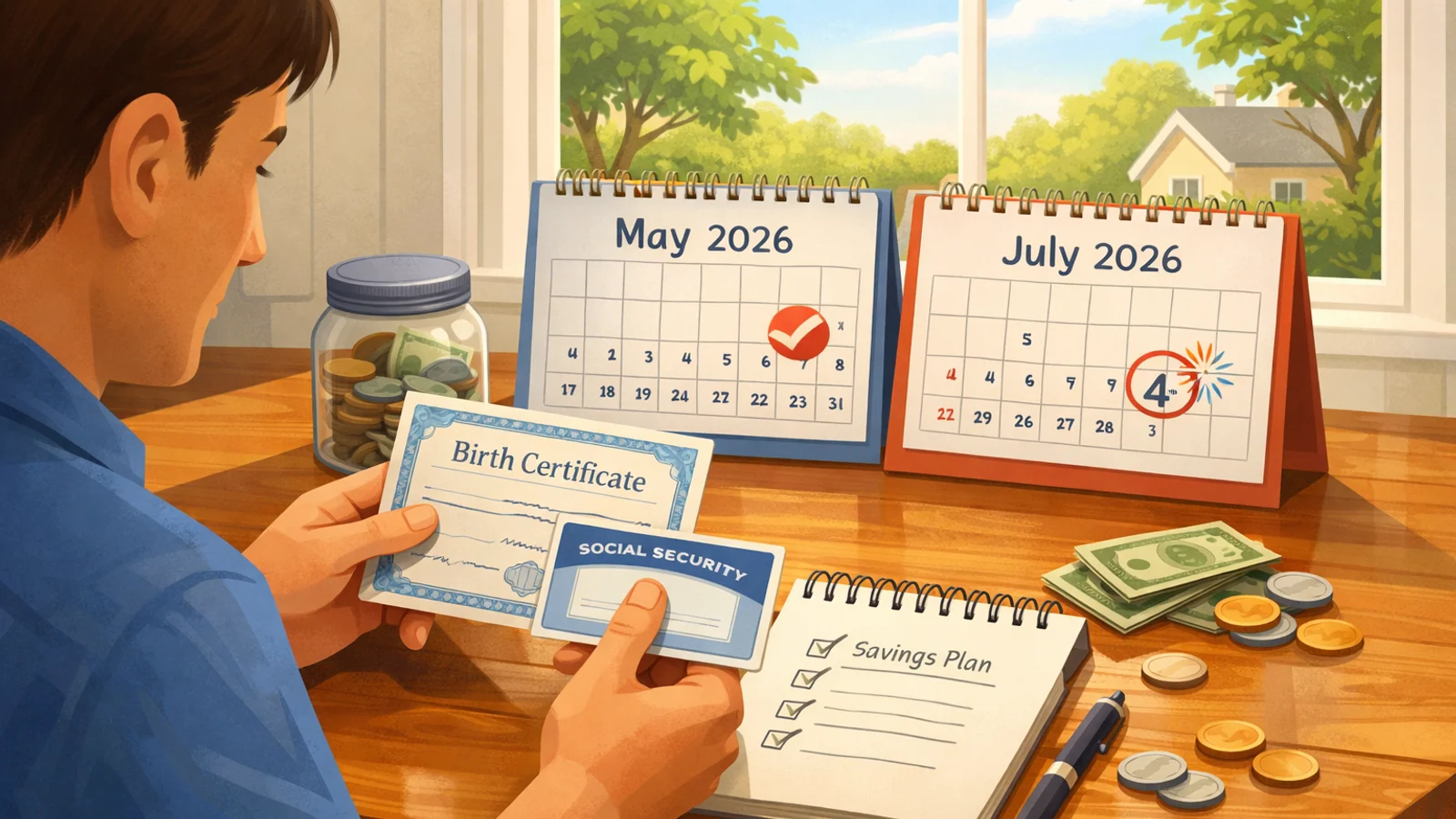
For families following the 2026 rollout, the timeline to keep in mind is:
- Around May 2026: expected activation notices or next-step instructions
- July 4, 2026: earliest widely reported date for contributions to begin (ap.org)
3. Keep tax-season documents together
Because current reporting references an IRS election process and Form 4547, keep your filing records organized now rather than scrambling later. (irs.gov)
4. Decide your family’s contribution plan early
Public materials describe annual contribution limits that parents should review carefully before assuming how much can go in. Some sources describe family contributions up to $5,000 per year, with separate rules discussed for employer support. (whitehouse.gov)
5. Separate “free money” headlines from real household planning
A federal seed contribution may be meaningful, but it does not replace:
- emergency savings
- paying down high-interest debt
- retirement saving
- regular budgeting for childcare, housing, and health costs
For most families, the smartest approach is to treat this as one tool, not the whole plan.
Questions parents should ask before they commit money
Once contributions open, practical questions matter more than political branding.
Ask:
- What investment option is the account actually using?
- What fees, if any, apply?
- Who is the account custodian?
- What happens if family income changes?
- What are the withdrawal rules at age 18 and later?
- How are taxes handled on gains or distributions?
- How do employer contributions affect the family’s own contribution room?
Several public summaries say withdrawals are restricted before age 18 and that tax treatment depends on how funds are later used. Parents should not assume the account works exactly like a 529, UTMA, trust, or Roth IRA. (time.com)
Where KidTrustFund fits in
KidTrustFund is not a government agency and does not make eligibility decisions. What families usually need during a rollout like this is a simpler way to track dates, documents, reminders, and contribution planning in one place.
For the 2026 cycle, the practical dates to keep visible are still the same:
- May 2026 for expected activation follow-up
- July 4, 2026 for expected contribution start timing
That gives parents a clear next step: get organized now, verify details when official instructions arrive, and avoid rushing based on incomplete summaries.
Bottom line
As of March 19, 2026, the biggest parent takeaway is straightforward: the public rollout is moving, but the most important family action right now is preparation, not panic.
If your child may fall inside the current eligibility window, keep your records ready, watch for May 2026 activation guidance, and plan around July 4, 2026 as the date contributions are expected to open. (irs.gov)
And before contributing, make sure you understand the account rules, tax treatment, and household tradeoffs for your own situation.