Parents Are Asking the Same 5 Questions About 2026 Child Accounts. Here’s a Clear Planning Guide.
If you have a baby, toddler, or older child at home, 2026 is the year many parents are starting to ask the same practical question: should I prepare for one of the new federal child investment accounts, and what do I need to do now?
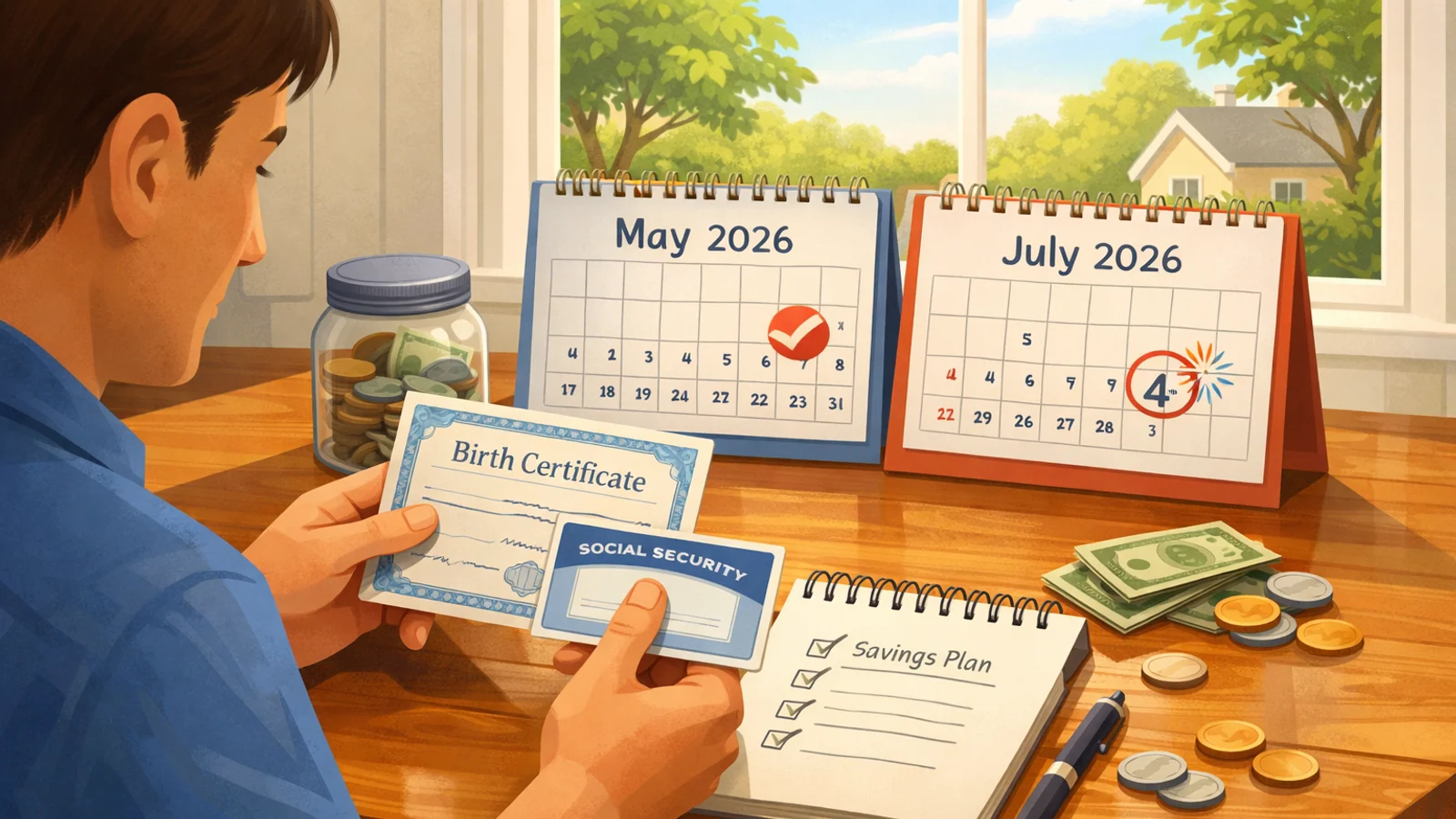
For families following the 2026 rollout, the biggest dates are now clearer. Federal guidance says contributions cannot be made before July 4, 2026, and IRS draft materials indicate parents may begin seeing account-election information starting in May 2026. The IRS has also said the one-time federal contribution is tied to an election to establish the account for an eligible child. (irs.gov)
KidTrustFund is not a government agency, but we do help parents think through what these deadlines could mean in real life. Below is a straightforward comparison of the questions families are asking most right now, plus a simple plan for what to do next.
First, what appears to be set for 2026?
Based on recent IRS and congressional materials, these points look like the core facts parents should watch:
- The accounts were created under the Working Families Tax Cuts law enacted on July 4, 2025. (irs.gov)
- Contributions start July 4, 2026; they cannot begin earlier. (irs.gov)
- IRS draft materials say account-election information is expected to become available starting in May 2026. (irs.gov)
- For the federal pilot contribution, the child generally must be a U.S. citizen and born between January 1, 2025, and December 31, 2028, and a parent or other eligible person must make the required election. (irs.gov)
- Public summaries say parents, family, friends, employers, and some organizations may be able to contribute, with a commonly cited annual cap of up to $5,000 per year while the child is under 18. (millermeeks.house.gov)
That gives parents a working timeline: watch for activation steps around May 2026, then plan for actual funding beginning July 4, 2026. (irs.gov)
The 5 questions parents are asking now
1) “Is my child eligible?”
Most likely yes for opening an account, but not every child appears eligible for the federal $1,000 pilot contribution.
Recent IRS and congressional summaries point to two different questions:
- Can an account be opened for the child?
- Can the child receive the federal pilot contribution?
For the federal pilot contribution, recent IRS guidance says the child must generally be a U.S. citizen and born from January 1, 2025 through December 31, 2028. Children born before 2025 may still be able to have an account opened if they are under 18, but that does not appear to mean they qualify for the federal seed contribution. (irs.gov)
Planning takeaway: if your child was born in 2025 or 2026, this is the group most parents are watching closely for the initial federal deposit opportunity. (irs.gov)
2) “Do I need to do anything, or is it automatic?”
Do not assume it is automatic.
The IRS said that for a child to receive the pilot contribution, a parent or other eligible person must elect to establish the account. IRS draft materials also reference a form process and an online tool or application. In other words, families should prepare for an action step, not just wait passively. (irs.gov)
Planning takeaway: if your child may qualify, gather basic documents now and be ready to complete the election once the process opens around May 2026. (irs.gov)
3) “When can I actually put money in?”
Not before July 4, 2026.
This is one of the clearest points in current guidance. IRS materials explicitly say contributions cannot be made before July 4, 2026. That matters because some parents are already trying to plan baby gifts, family contributions, or employer support. Those ideas may be useful, but the contribution window itself does not open before that date. (irs.gov)
Planning takeaway: use spring 2026 for setup and paperwork; use July 4, 2026 and after for actual contributions. (irs.gov)
4) “How is this different from a 529 plan or regular savings account?”
Think of this as a separate bucket, not a full replacement for everything else.
Public IRS guidance describes these as a new type of individual retirement account for eligible children. Congressional summaries also describe the structure as tax-deferred, with special contribution and distribution rules that are not the same as a 529 plan or ordinary custodial savings account. (irs.gov)
In plain English:
- A 529 is usually the account parents think of first for education saving.
- A regular savings account is simpler and more flexible, but usually offers less growth potential.
- This new child account appears designed as a long-term investment account with its own federal rules, eligibility limits, and withdrawal framework. (irs.gov)
Planning takeaway: many families may end up using more than one account type, depending on whether the goal is flexibility, education, or long-term investing. That is a planning decision, not a one-size-fits-all answer.
5) “What should I do between now and July?”
Here is the practical checklist.
If your child may qualify for the 2026 rollout
- Confirm your child’s date of birth.
- Make sure you have the child’s Social Security number or tax identification details available if needed for enrollment.
- Watch for IRS updates and form releases tied to the election process.
- Decide who will act as the responsible adult for setup if more than one parent or guardian is involved.
- Talk with grandparents or other family members now if they want to help, but remind them that funding starts July 4, 2026, not earlier. (irs.gov)
If your child is older or may not qualify for the federal seed contribution
- Do not assume there is no value in planning.
- Review whether the child may still be eligible to have an account opened even without the federal $1,000 contribution.
- Compare this option with your existing 529, custodial account, or family savings plan.
- Decide whether you want one “main” account or a simple split strategy across education, emergency, and long-term investing. (fong.house.gov)
A simple parent decision framework
If you are unsure where to start, use this quick test:
You may want to prioritize this new account first if:
- your child was born on or after January 1, 2025,
- you want to be ready for the possible federal seed deposit,
- and you are comfortable following a new federal setup process in 2026. (irs.gov)
You may want to compare options more carefully if:
- your child was born before January 1, 2025,
- you already use a 529 or custodial account,
- or you want maximum flexibility instead of a specialized account structure. (fong.house.gov)
Bottom line for March 16, 2026
As of Monday, March 16, 2026, the most useful planning view for parents is this:
- Activation and election details appear to be coming around May 2026. (irs.gov)
- Contributions start July 4, 2026. (irs.gov)
- The federal contribution is not something families should assume happens automatically; an election appears to be required. (irs.gov)
- Eligibility for the federal seed contribution appears focused on U.S. citizen children born from January 1, 2025 through December 31, 2028. (irs.gov)
That means the smartest move right now is not guessing. It is getting organized.
If you are a parent planning for this 2026 rollout, the best next step is simple: prepare your child’s basic documents, watch for May 2026 activation materials, and treat July 4, 2026 as the first real funding date. (irs.gov)
This article is for general educational purposes only and should not be treated as tax, legal, or investment advice.