Parents Have Questions About 2026 Child Accounts. Here’s the Practical KidTrustFund Checklist.
If you have been hearing about the new federal child account rollout in 2026, you are probably asking some version of the same questions as everyone else:
- Is my child eligible?
- When can I actually open an account?
- When can money go in?
- What should I do now so I am not scrambling later?
Here is the short version.
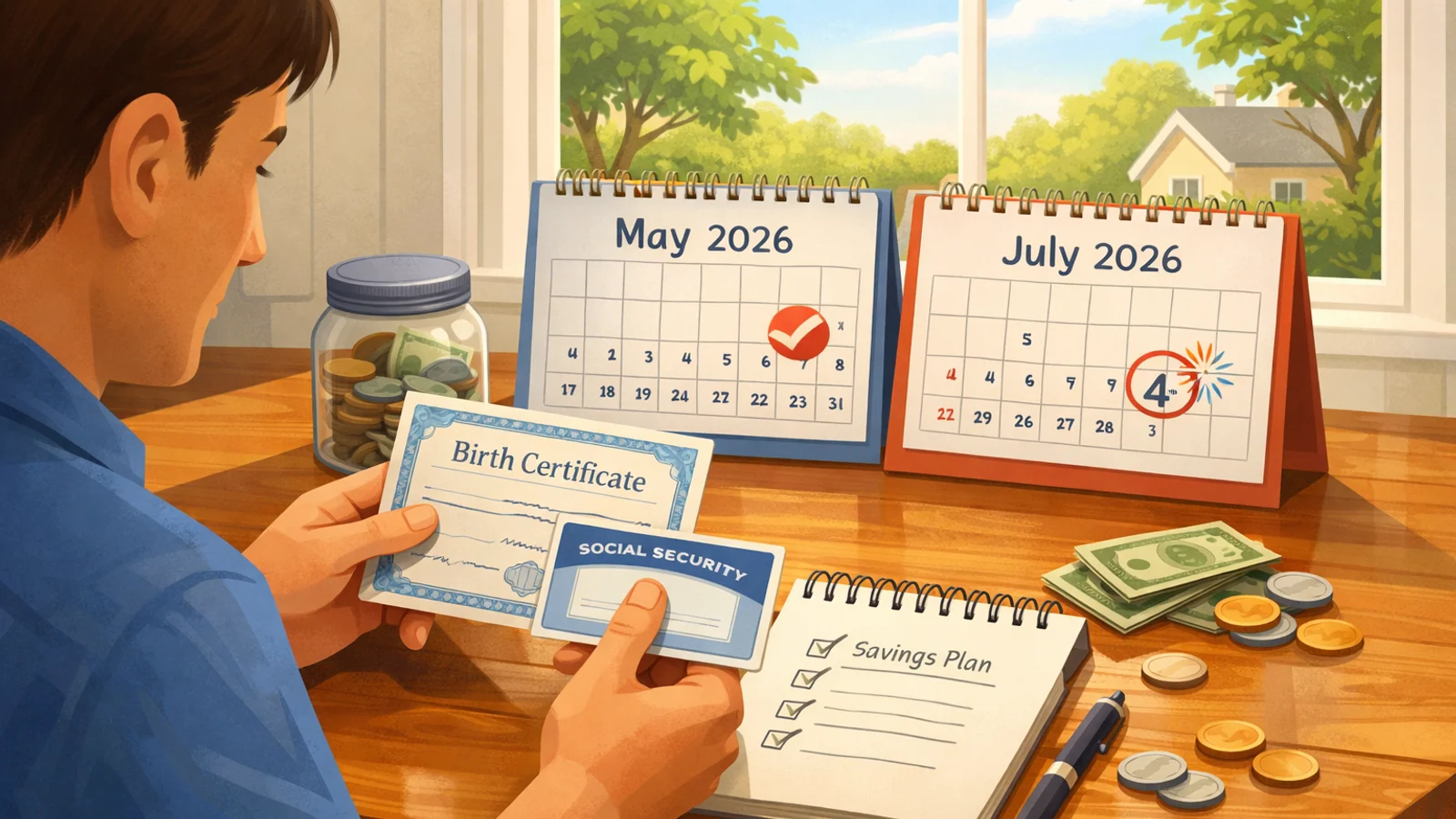
The IRS says these accounts can be established for eligible children, with guidance already issued and more regulations expected. For families focused on timing, the two dates that matter most are around May 2026 for activation notices and setup progress and July 4, 2026 for contributions to begin. The IRS has also said contributions cannot be made before July 4, 2026. (irs.gov)
KidTrustFund is not a government agency, and this article is not legal, tax, or investment advice. It is a planning guide for parents who want to be organized before the 2026 rollout.
What is changing in 2026
Federal guidance released by the IRS in December 2025 described the new child account framework and confirmed that a one-time $1,000 pilot program contribution is tied to eligible children when the required election is made. The IRS also states that these accounts cannot be funded before July 4, 2026. (irs.gov)
The current public guidance also points families toward a mid-2026 online process for opening or managing these accounts. IRS instructions reference a government site for the program and indicate the online tool is expected in the middle of 2026, which lines up with the practical expectation that many parents will first see real activation steps around May 2026. That May timing is best understood as a rollout window, not a guaranteed personal notice date for every family. (irs.gov)
The questions parents are asking right now
1) Do I need to do something before July 4, 2026?
Yes. Even though contributions cannot start until July 4, 2026, parents should use spring 2026 to get ready. Waiting until July means you may be trying to verify identity, confirm eligibility, choose a provider, and understand contribution rules all at once. (irs.gov)
2) Which kids may qualify for the federal seed contribution?
Based on current IRS and Treasury guidance, the one-time $1,000 federal contribution is tied to eligible children, and public materials say children born on or after January 1, 2025 and before January 1, 2029 may qualify if the required election is made and other program rules are satisfied, including citizenship requirements described by the IRS. Parents should verify their child’s exact eligibility once the live enrollment process opens. (irs.gov)
3) Can grandparents or friends contribute?
The IRS says contributions from family, friends, and employers are part of the framework, but not before July 4, 2026. The IRS bulletin also explains that not all contribution types are treated the same under the annual limit rules. (irs.gov)
4) What can the money be invested in?
Current IRS guidance says eligible investments during the growth period are generally limited to certain low-cost mutual funds or ETFs tracking indexes of primarily U.S. companies, with additional restrictions such as no leverage and a fee cap standard described in the guidance. (irs.gov)
5) Will the account be usable right away?
No. The IRS bulletin says distributions during the growth period are tightly limited. In practical terms, parents should think of this as a long-term child savings structure, not a checking account or general spending account. (irs.gov)
The practical KidTrustFund plan for parents
Step 1: Build your document folder now
Before activation notices start arriving around May 2026, gather:
- Your child’s full legal name
- Date of birth
- Social Security number or taxpayer identification details, if applicable
- Proof of citizenship documents, if needed for eligibility confirmation
- Parent or guardian identification
- Current mailing address and email
This is basic prep, but it is usually what slows families down when enrollment opens.
Step 2: Decide who will monitor rollout updates
Pick one adult now. That person should be responsible for:
- Watching for notices around May 2026
- Checking official IRS or Treasury updates
- Tracking when the account-opening tool is live
- Keeping copies of confirmations and elections
One clear owner is better than “we both thought the other person was handling it.”
Step 3: Separate opening the account from funding the account
A lot of parents are blending these into one step, but they are not the same.
- Account setup and election activity: expected around mid-2026, with practical parent attention starting around May 2026
- Contributions: start July 4, 2026, not earlier (irs.gov)
That means your goal for spring is readiness, not depositing money early.
Step 4: Make a July contribution plan now
If you expect to contribute once contributions open on July 4, 2026, decide in advance:
- Will you make a one-time summer contribution?
- Will you set a monthly amount?
- Will grandparents give birthday or holiday money into the account?
- Will you pause another savings goal to make room for this one?
The best plan is the one you will actually follow.
Step 5: Keep expectations realistic
Public statements from Treasury have promoted these accounts aggressively, including examples of long-term growth. But those examples depend on future returns, contribution behavior, fees, and time. Parents should treat projections as illustrations, not promises. (home.treasury.gov)
A simple comparison parents can use
If your priority is “don’t miss the federal setup window”
Focus on:
- eligibility documents
- notice tracking
- account opening
- election completion
If your priority is “start family contributions fast”
Focus on:
- choosing your contribution amount now
- deciding which relatives may contribute
- setting a calendar reminder for July 4, 2026
- confirming the provider process once the platform is live
If your priority is “keep it low maintenance”
Focus on:
- one parent owner
- one document folder
- one reminder for May 2026
- one reminder for July 4, 2026
The biggest mistake to avoid
The biggest mistake is assuming that “I’ll deal with it when it launches” is a plan.
For most families, the smarter approach is:
- prepare documents in March, April, or early May 2026,
- watch for activation-related notices around May 2026, and
- be ready to make any first contribution on or after July 4, 2026.
That sequence fits the current public guidance better than waiting for a perfect final rule summary to land in your inbox. (irs.gov)
Bottom line for parents
The 2026 child account rollout is no longer just a vague policy idea. The IRS has already issued guidance, the online process is expected in mid-2026, and July 4, 2026 is the key date for contributions to begin. For parents, the practical move is to spend spring getting organized so you are ready when activation steps start showing up around May 2026. (irs.gov)
KidTrustFund can help families stay organized, compare questions, and plan next steps clearly. But always confirm final eligibility, enrollment, tax treatment, and contribution rules through official program guidance before acting.