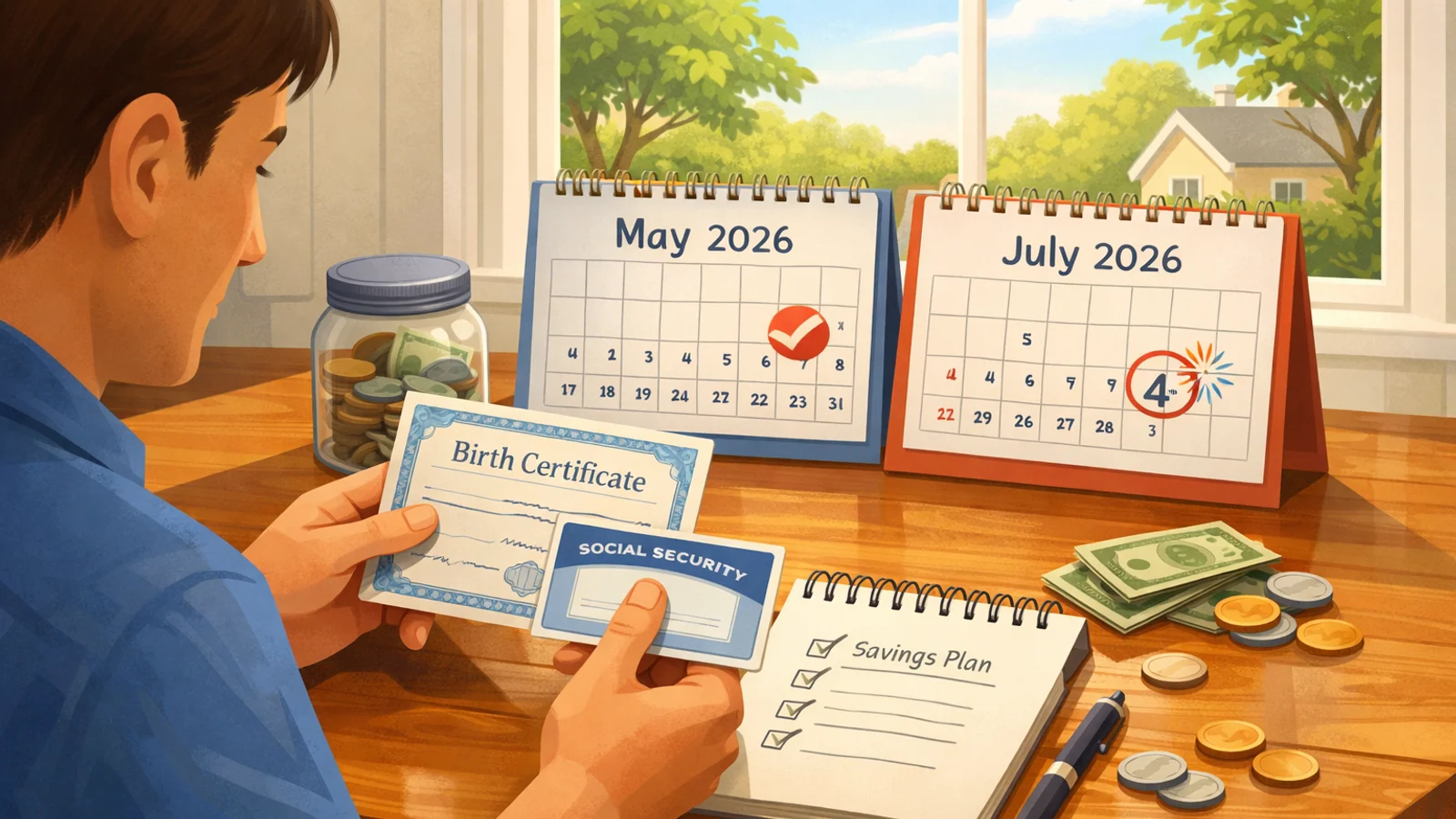
KidTrustFund guide: what parents should do now about 2026 child account questions
Parents are asking the same practical questions right now:
- Is this program real and active yet?
- When can I open an account?
- When can anyone actually put money in?
- Which children qualify for the federal $1,000 pilot contribution?
- What should I get ready before July 4, 2026?
Here is the short version: as of March 19, 2026, federal guidance is out, the account-opening process is being defined, activation notices are expected to start around May 2026, and regular contributions cannot begin before July 4, 2026. KidTrustFund is not a government agency, but families can still use this window to get organized and avoid last-minute confusion. (irs.gov)
What is settled as of March 19, 2026
Recent IRS and Treasury guidance answers a few of the biggest timeline questions.
- The new child account framework was created under federal law enacted on July 4, 2025. (irs.gov)
- Parents, guardians, and other authorized individuals will be able to open initial accounts for eligible children. (irs.gov)
- Activation will require an authentication step, and IRS instructions say Treasury or its agent will begin sending that information starting in May 2026. (irs.gov)
- No contributions can be accepted before July 4, 2026. That includes family contributions and most other standard funding. (irs.gov)
- The annual standard contribution limit is $5,000 per child, with later inflation adjustments after 2027. (whitehouse.gov)
That means the planning period for parents is basically now through late spring 2026.
The question parents care about most: does my child qualify for the $1,000 federal contribution?
Public guidance says the one-time federal pilot contribution is generally tied to children who are:
- U.S. citizens
- have a valid Social Security number
- and were born from January 1, 2025 through December 31, 2028. (whitehouse.gov)
The IRS also says an authorized individual can make an election for an eligible child to receive that $1,000 pilot contribution, and the deposit would be made no earlier than July 4, 2026, after the election is made and Treasury confirms the account is open. (irs.gov)
If your child was born before January 1, 2025, current public descriptions suggest you may still be able to open an account if the child is otherwise eligible and under age 18, but the automatic or pilot $1,000 contribution rules are narrower than the broader account-opening rules. Parents should treat those as two separate questions: account eligibility and pilot-contribution eligibility. That distinction is based on IRS guidance and program descriptions now available. (irs.gov)
What parents should do before May 2026
This is the useful part. Even before contributions open, you can reduce friction.
1. Confirm basic identity details
Have these ready:
- child’s full legal name
- child’s date of birth
- child’s Social Security number
- parent or guardian identification details
- current mailing address
- current email and phone number
The reason this matters is simple: the activation process is expected to include authentication, and delayed notices or mismatched records can slow setup. (irs.gov)
2. Watch for activation notices around May 2026
Do not assume contributions start the moment you hear about the program. The current public timeline points to:
- activation information starting around May 2026
- contributions starting July 4, 2026. (irs.gov)
Those are different milestones. Activation is about getting the account ready. Funding is later.
3. Decide who will contribute first
Current guidance says contributions may come from multiple sources, including:
- parents or guardians
- grandparents and relatives
- friends
- employers
- certain charitable organizations and government entities in specific qualified cases. (whitehouse.gov)
If several adults want to help, create a simple family plan now so you do not accidentally overcomplicate the first funding window.
4. Set a realistic first-year amount
The legal limit may be $5,000 annually, but many families do better with a smaller amount they can actually sustain. (whitehouse.gov)
A practical approach is to pick one of these now:
- one-time starter gift in July 2026
- monthly family contribution schedule
- birthday and holiday contribution plan
- employer contribution check-in during benefits season
5. Ask your employer one specific question
IRS guidance says employers may be able to contribute up to $2,500 per year under an employer contribution program, and that amount can be excluded from employee taxable income under the stated rules. But that does not mean every employer will offer it. (irs.gov)
The best question to ask HR is:
“Do we plan to offer a child account contribution benefit in 2026, and if so, when will employees get details?”
Common parent misunderstandings in March 2026
“If I can open it in spring, I can fund it right away.”
Not based on current IRS guidance. Opening and activation may happen before funding, but contributions cannot be made before July 4, 2026. (irs.gov)
“Every child gets the $1,000 automatically.”
That is too broad. Current public guidance ties the pilot contribution to specific eligibility rules, including birth dates, citizenship, and an election process by an authorized individual. (whitehouse.gov)
“I need to max this out or it is not worth doing.”
Not necessarily. A smaller, consistent family habit may be easier to maintain than chasing the annual maximum. The official rules set limits and timing, but they do not require every family to contribute the same way. (irs.gov)
“KidTrustFund can tell me my child is definitely approved.”
No. KidTrustFund can help families understand the public timeline and prepare questions, but final eligibility, activation, and contribution handling depend on the official program rules and the institutions involved. (irs.gov)
A simple March-to-July 2026 checklist
If you want the shortest useful version, use this:
In March and April 2026
- gather your child’s identifying information
- verify your mailing address and contact details
- decide which adult will handle setup
- make a list of possible contributors
- ask HR whether an employer contribution option is coming
Around May 2026
- watch for activation or authentication instructions
- complete account-opening steps promptly if available
- confirm whether you are also making the election for the federal $1,000 pilot contribution
Starting July 4, 2026
- begin contributions if you are ready
- keep records of who contributes and how much
- avoid assuming all contribution types are treated the same way
That timeline matches the current federal rollout now described publicly. (irs.gov)
Bottom line for parents
As of Thursday, March 19, 2026, the biggest new development is that the IRS and Treasury have moved from general description to more detailed proposed regulations and instructions. For families, the practical takeaway is clear: use spring 2026 to prepare, expect activation-related notices around May 2026, and remember that regular contributions start July 4, 2026, not earlier. (irs.gov)
KidTrustFund’s role is to help parents stay organized, compare the real questions, and plan the next step without hype. This article is for general information only and should not be treated as tax, legal, or investment advice.